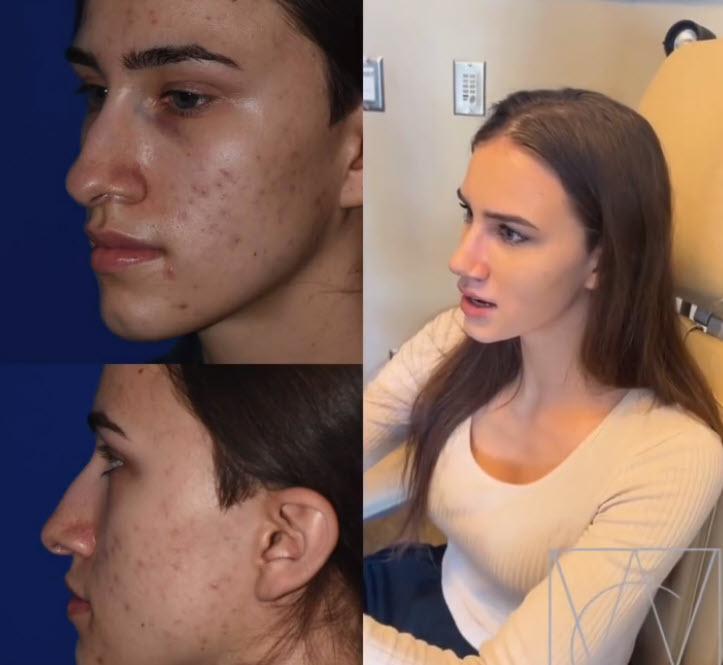
Can Your Nose Collapse After Rhinoplasty?
Rhinoplasty is one of the most commonly performed facial plastic surgeries. While most patients heal without major structural problems, concerns about nasal collapse post-surgery are common. This guide explains why collapse can occur, how to spot it, and what can be done to prevent or correct it.
What do we mean by “nasal collapse”?
When people talk about a nose “collapsing,” they typically mean structural weakening of the nose that causes visible deformity and/or breathing difficulty. Collapse may involve:
- Pinching of the middle portion of the nose (internal or external valve collapse).
- Saddle-nose deformity — a loss of the bridge height that creates a concave profile.
- Tip droop or progressive loss of support of the nasal tip.
These changes vary in severity — from mild narrowing that affects airflow to dramatic changes that affect both form and function.
How common is true collapse after rhinoplasty?
True structural collapse is uncommon when rhinoplasty is performed by an experienced facial plastic surgeon who respects nasal support. Most routine cosmetic rhinoplasties do not result in collapse. However, the risk rises when:
- Too much cartilage or bone is removed during surgery.
- Key supporting structures aren’t preserved or reinforced.
- The patient has an underlying connective tissue disorder or previously damaged nasal framework.
Understanding these risk factors helps both surgeon and patient plan a safer operation with long-term stability in mind.
Why collapse happens — the common causes
Collapse is rarely a spontaneous event — it usually results from one or a combination of the following:
- Over-resection: Excessive removal of dorsal cartilage or nasal bones can remove the structural support the nose needs to keep its shape.
- Loss of lower lateral cartilage support: Weakening or trimming of the tip cartilages without adequate reinforcement can cause tip collapse and valve dysfunction.
- Poor technique or inexperience: Inadequate attention to preserving and rebuilding the internal support framework increases risk.
- Infection or trauma: Rare postoperative infections or subsequent injuries can damage the cartilage framework.
- Revision surgeries: Multiple prior rhinoplasties make the nose more vulnerable because native cartilage is reduced and scar tissue alters anatomy.
Signs and symptoms to watch for
Collapse can be functional (breathing difficulty), cosmetic (visible deformity), or both. Key warning signs include:
- New or worsening nasal obstruction that doesn’t improve with swelling resolution.
- A pinched look to the mid-nose or a narrowing of the nostrils when inhaling (external valve collapse).
- A loss of the dorsal height — the bridge looks flattened or scooped (saddle deformity).
- Progressive tip droop or asymmetry that wasn’t present immediately after surgery.
- Pain, recurrent infections, or pus — these need prompt evaluation.
If you notice any of these changes after your initial recovery (typically beyond the first few months), make an appointment with your operating surgeon to evaluate the problem.
Prevention: what good surgical planning looks like
The best way to avoid collapse is careful surgical planning and techniques that preserve or rebuild support. Preventive strategies include:
- Preserving as much native cartilage as possible.
- Using cartilage grafts (from the septum, ear, or rib) to reinforce weak areas.
- Applying spreader grafts or suturing techniques to maintain the internal valve angle.
- Conservative bone work and respecting the nasal framework’s biomechanics.
Choosing a board-certified, experienced facial plastic or ENT surgeon who specializes in rhinoplasty reduces the risk of long-term problems.
When collapse does occur: revision options
If structural weakness develops, revision rhinoplasty is often the solution. The revision strategy depends on the deformity:
- Spreader grafts or onlay grafts — used to rebuild the bridge and protect the internal valve.
- Columellar struts and tip grafts — to restore tip support and projection.
- Septal reconstruction or rib cartilage grafts — when large amounts of cartilage are needed.
- Alar batten grafts — to treat external valve collapse and stabilize the sidewall.
Revision surgery is more complex than primary rhinoplasty and requires careful planning, often using cartilage from other donor sites when septal cartilage is depleted.
Recovery timeline and what to expect
Swelling and minor shape changes are normal for many months after rhinoplasty. However, true collapse is usually progressive and not just temporary swelling. Typical timeline notes:
- 0–3 months: most of the bruising and early swelling subside; subtle changes may still occur.
- 3–12 months: continued refinement as deeper swelling resolves; structural problems that will persist are often evident by now.
- Beyond 12 months: the nose has largely matured — persistent deformity or airway problems at this stage usually reflect true structural issues that may need revision.
Practical tips for patients
- Follow your surgeon’s postoperative instructions closely — avoid trauma and strenuous activity as directed.
- Keep follow-up appointments so your surgeon can track healing and address concerns early.
- Be cautious with secondary procedures — each operation increases the chance of needing grafts and complex reconstruction.
- If you have breathing difficulty, document when it happens (exertion, lying down, with cold, etc.) and bring this information to your consult.


No comments:
Post a Comment